8 March

Before sending a message, check if there are local contact details for a Sri Chinmoy Centre in your country (see the list below). If you don't see your country, then please use this form and we'll make sure it gets to the right person.
For copyright and media requests, you can also use this form.
Local contacts: Australia • Bangladesh বাংলাদেশ • Bosnia and Herzegovina • Brazil Brasil • Bulgaria България • Canada • Czech Republic Česko • Croatia Hrvatska • Estonia • France • Finland Suomi • Georgia საქართველო • Great Britain • Ghana • Greece Ελλάδα • Hungary • Iceland Ísland • India • Indonesia • Ireland • Italy Italia • Japan 日本 • Kenya • Macedonia • Mongolia Монгол • Nepal नेपाल • Netherlands Nederland • New Zealand • Portugal • Puerto Rico • Russia Россия • Serbia • Singapore • Slovenia Slovenija • Slovakia Slovensko • South Africa • United States
• German-speaking countries/Deutschsprachige Länder Germany, Austria and Switzerland
• Spanish-speaking countries/Países de habla hispana Spain, Central and South America
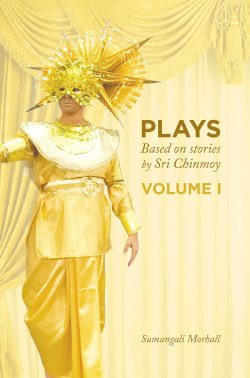 This month marks the release of a new book of ten plays by Sumangali Morhall, based on stories by Sri Chinmoy. Each play contains between one and thirteen stories, set to rhyming verse.
This volume has since been accepted by the library of Harvard Divinity School.
Sumangali comes from York, UK and this is her second book, her first being Auspicious Good Fortune, an account of how she came to the spiritual life.
In the introduction to the book, Sumangali explains how she began writing these plays:
"These rhyming plays began on a Christmas Trip with Sri Chinmoy in China, December 2004. On our winter retreats, as well as meditating with Sri Chinmoy in person, we had the privilege of immersing ourselves in his new creations: songs, prayers, aphorisms, stories and artwork. In the evenings it usually fell to us, his disciples, to entertain one another on stage. Much of the programme consisted of plays based on the Master’s stories – some of which are tales retold from Indian folklore, others anecdotes from Sri Chinmoy’s own experience, others born of his own creative imagination, and many seemingly from delightful worlds between.
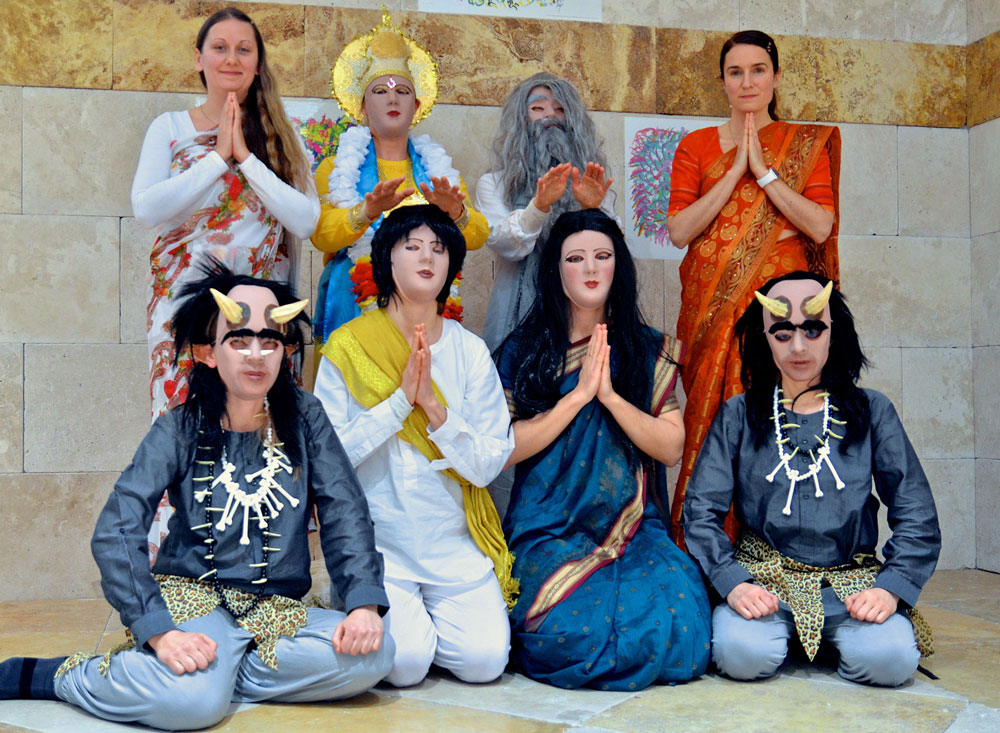
I rarely involved myself in plays up until then. I was – and still am – terrible at acting. My self-consciousness and inability to handle pressure led to a chaos of forgetfulness on stage. It saddened me not to contribute though, so that year in China I decided to take a risk and play to my strengths. I like to write. I could reliably read something out from paper. I could draw some faces on card, cut out holes for eyes, and tie them back as make-shift masks. The characters would mime, while others – including myself – would read their lines into a microphone off-stage. Hence everyone was hiding, which suited me well. The actors did not need to memorise their lines verbatim, which suited them too.
I was quite sure it would end in disaster even before it began, but to my surprise there were no accidents, even amongst the short-sighted, and any confusion was only a minor distraction. Sri Chinmoy was attentive, and I dare say even seemed quite pleased, which astonished me no end. So a new tradition began, and has continued beyond the Master’s passing, as the Sri Chinmoy Centre meets each year for Christmas Trips."
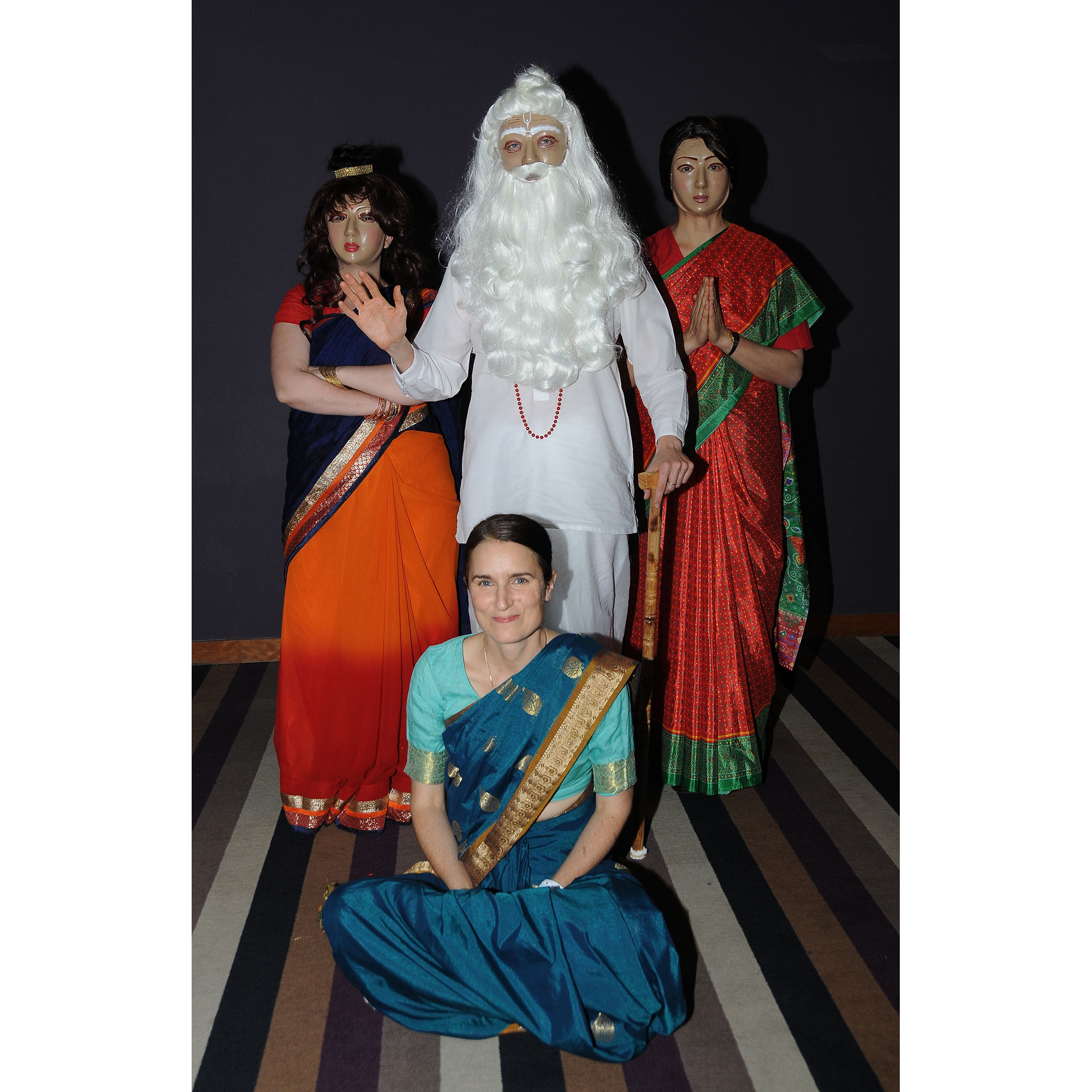
While striving to preserve the original teachings, the plays are embellished – often in a humorous way – and sometimes carry a modern interpretation.
As the actors mime behind masks while the poetry is recited off-stage, the plays perhaps combine two ancient spiritual traditions – rendering spiritual stories into verse, and masked performances.
The Ramayana, one of the great epics of the Hindu tradition, is known as the adi-kavya, or first poem. Great spiritual writings – for example, the Mahabharata and the Christian Bible – have been wrought into poetry through the ages, as an act of spiritual discipline and devotion. Sri Chinmoy himself set to verse the works of Sri Aurobindo, his own Guru - at the age of fifteen, he created 188 lines of Bengali verse from Sri Aurobindo's short story Ksharma Adarsha. In 1956 he translated it into 107 lines of English iambic pentameter verse. He set the Bengali poem to music in 2002, and it remains his longest song.
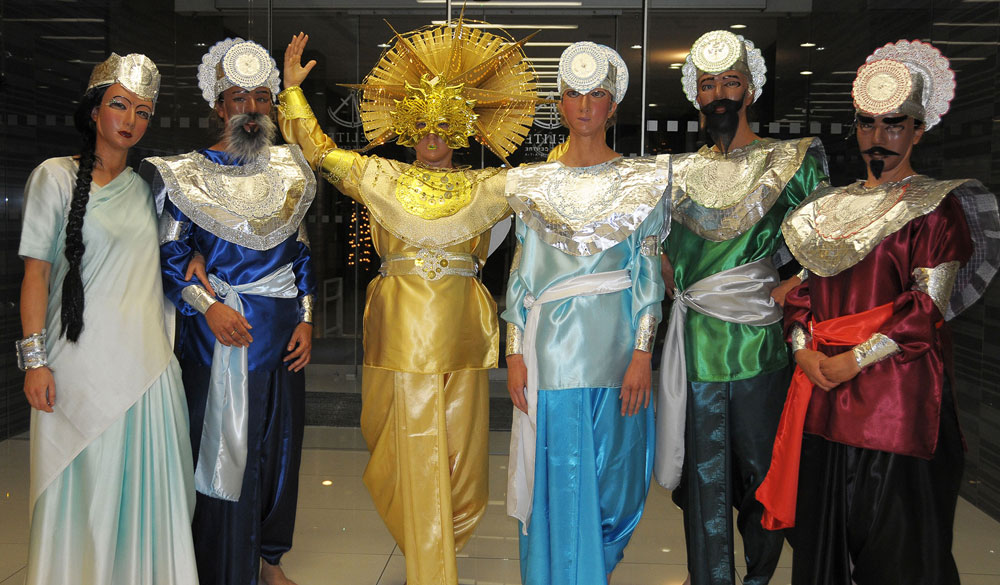
The use of masks in spiritual ceremonies dates back thousands of years, and later extended to various theatrical traditions throughout the world. In Asian countries such as India and Indonesia they are often used in elaborate performances of the Ramayana and Mahabharata. In the Middle East, folk theatre includes masked acting and puppetry, which has been a part of religious occasions for centuries. Actors in Ancient Greece wore masks, especially when depicting a powerful character such as a god. In Japan, Noh theatre evolved from more ancient forms of masked acting.
Related
Book available for purchase
More stories from Sri Chinmoy's students.







interviews with Sri Chinmoy's students






Except where explicitly stated otherwise, the contents of this site are licensed under a Creative Commons Attribution-NonCommercial-NoDerivs 3.0 Unported License. read more »
SriChinmoyCentre.org is a Vasudeva Server project.